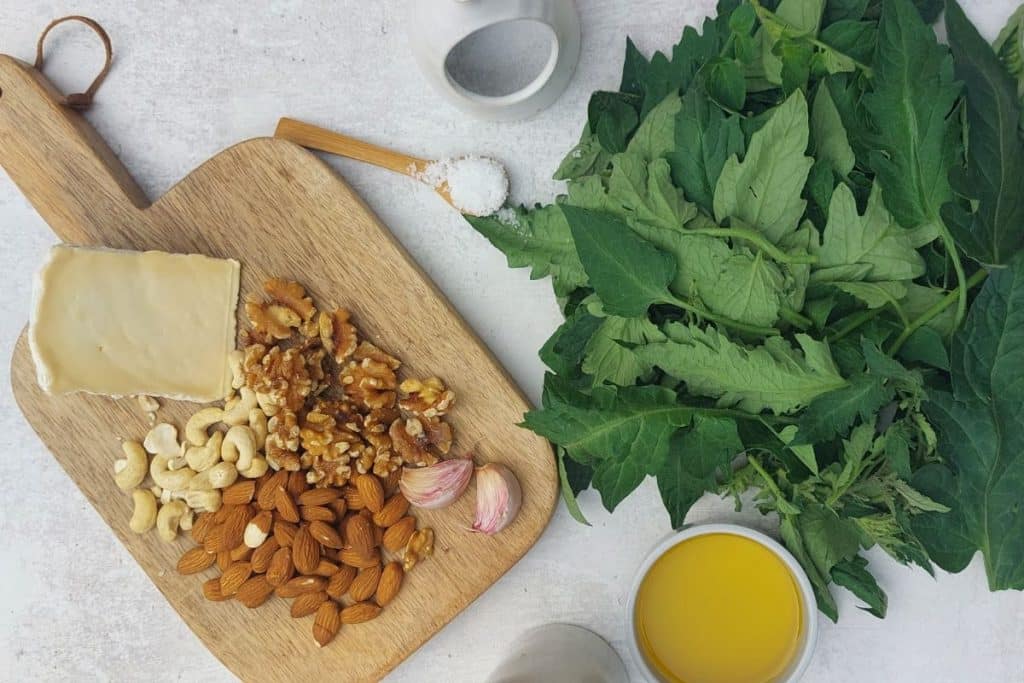
Celebrate the height of the growing season with this vibrant Tomato Leaf Pesto with Sharpham Rustic, a fresh, aromatic recipe that captures the essence of summer in every spoonful. Made with the tender young leaves from tomato plants, this pesto offers a beautifully herbaceous flavour—green, earthy, and slightly peppery—bringing a unique twist to the classic basil‑based version. When blended with creamy, tangy Sharpham Rustic cheese, the result is a rich, velvety pesto that feels both familiar and excitingly different.This recipe is perfect for gardeners and food lovers looking to make the most of their tomato plants. Tomato leaves are often pruned and discarded, but they’re full of bold, fragrant character that shines when paired with basil, nuts, and high‑quality olive oil. Using them not only reduces waste but also adds depth and complexity you won’t find in traditional pesto. It’s a brilliant way to transform simple seasonal ingredients into something truly special.Whether you’re tossing it through fresh pasta, spooning it over grilled vegetables, spreading it on warm sourdough, or stirring it into summer salads, this pesto brings a burst of flavour to any dish. It’s quick to make, endlessly versatile, and a delicious showcase of Sharpham Rustic’s creamy texture and gentle acidity. If you’re looking for a new seasonal recipe, a creative way to use tomato leaves, or a standout pesto for summer entertaining, this one is a must‑try.
Ingredients
- 1 cup young tomato leaves from healthy, organic plants only
- ½ cup fresh basil leaves
- 1 garlic clove
- 30 g toasted cashew nuts or mixture of walnuts, almonds etc
- 50 g Sharpham Rustic Cheese finely grated
- 120 ml extra virgin olive oil plus more if needed
- Zest of ½ lemon
- Sea salt and black pepper to taste
- Optional: 1–2 tsp 5–10ml lemon juice for brightness
Instructions
Prepare the leaves:
- Rinse and dry the tomato and basil leaves. Remove any woody stems.
To create the Pesto:
- In a food processor or blender, combine the tomato leaves, basil, garlic, and nuts. Pulse until roughly chopped.
- Add grated Sharpham Rustic and lemon zest. With the motor running, slowly drizzle in the olive oil until you reach a smooth, spoonable consistency. Add a splash more oil if needed.
- Season to taste- Add salt, black pepper, and lemon juice if desired to brighten the flavour.
- Serve or store: Use immediately or store in a sealed jar in the fridge for up to 5 days. To preserve freshness, cover the top with a thin layer of olive oil.
- Tip: Freeze in small portions using an ice cube tray—perfect for tossing into hot pasta dishes straight from the freezer.
Notes
Tomato Leaf Pesto with Sharpham Rustic — FAQ
Is it safe to eat tomato leaves?
Yes—young, healthy tomato leaves from organic plants are safe to eat when used in small culinary quantities. They add an earthy, green, slightly peppery flavour. Always avoid leaves from diseased plants and remove any woody stems.What is Sharpham Rustic cheese?
Sharpham Rustic is a semi-hard, creamy, slightly tangy cow’s milk cheese made in Devon. Its mellow acidity and rich texture blend beautifully into pesto, adding depth and body.Can I substitute the tomato leaves?
If tomato leaves aren’t available, you can increase the basil or add other soft herbs (like parsley). The flavour will be different—less earthy and more traditionally “green”—but still delicious.How long does the pesto keep?
Store the pesto in a sealed jar in the fridge for up to 5 days. For best freshness, cover the surface with a thin layer of olive oil.Can I freeze tomato leaf pesto?
Absolutely. Freeze it in small portions—an ice cube tray works perfectly. Pop out cubes and store them in a freezer bag for easy use in pasta, soups, or sauces.Do I need to add lemon juice?
Lemon zest is included in the recipe, but lemon juice is optional. Add 1–2 teaspoons if you prefer a brighter, fresher flavour.Can I use nuts other than cashews?
Yes. Walnuts, almonds, or a mix of nuts all work well. Each will slightly change the flavour and texture, but the recipe is very forgiving.What if my pesto is too thick?
Simply drizzle in a little more extra virgin olive oil while blending until you reach a smooth, spoonable consistency.How can I use this pesto?
It’s incredibly versatile—try it with:- Fresh pasta
- Grilled vegetables
- Toasted sourdough
- Summer salads
- As a marinade for chicken or fish